Grind Fineness
Particle size may vary slightly between batches depending on grain hardness and moisture at milling. This natural variance does not affect cooking performance.
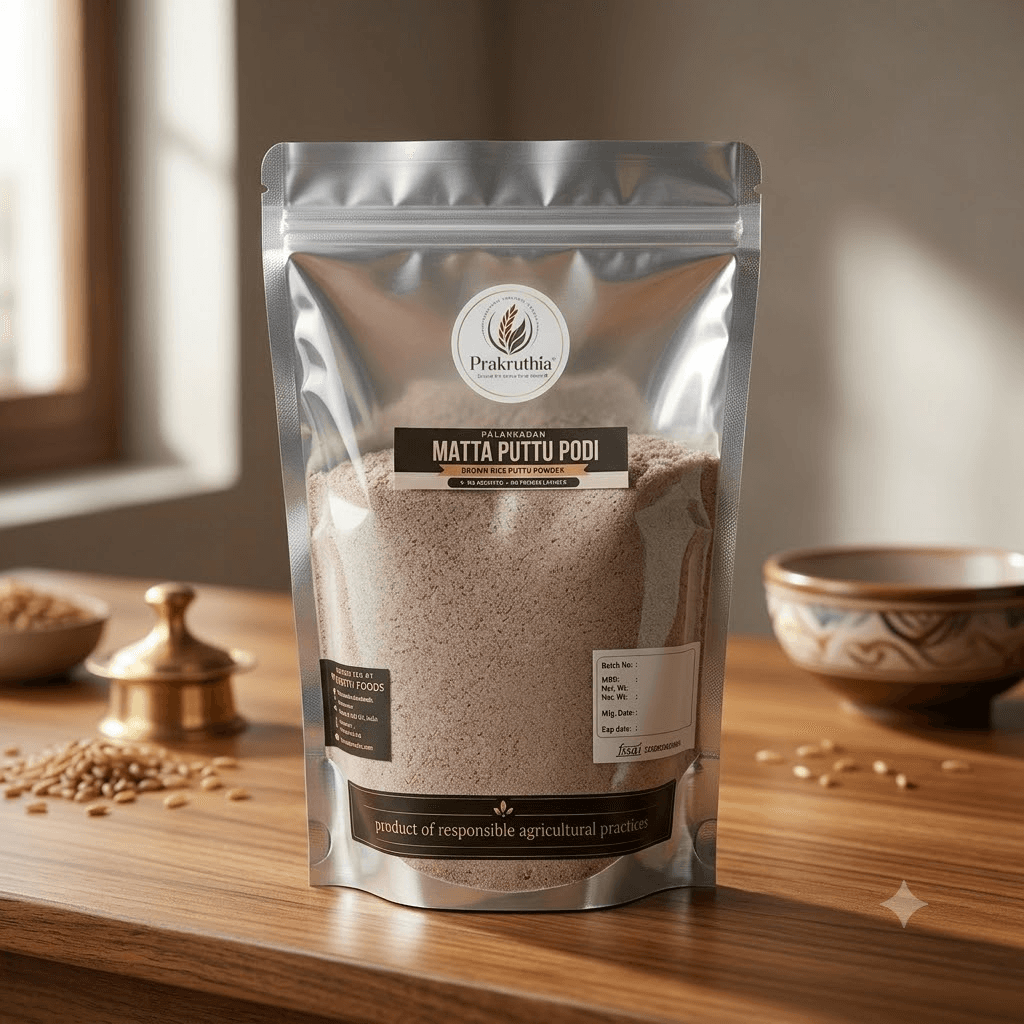
Stone-ground Palakkadan Matta rice flour for the perfect puttu, appam, and idiyappam
Matta Rice Powder — known locally as പുട്ടുപൊടി or അരിപ്പൊടി — is the quiet backbone of Kerala's breakfast culture. From the cylindrical steam of a puttu kutti rising at dawn, to the lacy edges of an appam sizzling on a curved pan, to the delicate threads of idiyappam being pressed through a mould, this humble flour connects every Malayali kitchen to centuries of culinary tradition.
At Prakruthia, our rice powder begins with authentic Palakkadan Matta rice — the same reddish-brown grain that has nourished Kerala for generations. We believe that great puttu or appam starts not at the stove but at the source: with the right paddy, responsibly grown in the clay-loam fields of Palakkad, and milled with care that honours the grain's natural character. The result is a flour that carries the earthy warmth and subtle nuttiness that commercial alternatives simply cannot replicate.
What makes it special
The journey from whole Matta grain to silky-fine powder is a deliberate, unhurried process. Selected rice is first soaked to the precise moisture level — too dry and the grain shatters unevenly; too wet and the flour turns gummy. After controlled sun-drying to bring the moisture back to an optimal window, the grains are ready for milling.
We employ traditional stone-grinding (kal ural) principles adapted to small-batch production. Unlike high-speed steel roller mills that generate heat and strip the grain of its delicate aroma, stone milling at lower temperatures preserves the natural oils, colour pigments, and earthy fragrance of Matta rice. The fineness of the grind is calibrated for each end use — slightly coarser for puttu that needs to stay fluffy and separate, and finer for appam and idiyappam batters that demand smooth flow.
Every batch is checked for consistency: uniform particle size, correct moisture content (critical for shelf life without preservatives), and the signature pale-red hue that tells you the bran's goodness is still present.
Stone-ground flour
Calibrated stone grinding preserves natural oils, colour pigments, and aroma
Each batch of Chakka Varatty is uniquely its own — a reflection of the season, the fruit, and the hands that made it.
Particle size may vary slightly between batches depending on grain hardness and moisture at milling. This natural variance does not affect cooking performance.
The pale reddish tint comes from residual bran pigments. Intensity varies with each harvest's soil conditions — a sign of authenticity, not inconsistency.
Ambient humidity during drying and milling can cause minor moisture differences. Store in airtight containers to maintain optimal texture.
Natural starch content fluctuates with harvest season. Some batches may absorb slightly more or less water — adjust liquid ratios to taste.
Variation in colour, texture, and sweetness is a natural quality of handcrafted, small-batch production — not a defect. It is precisely what makes each jar special.
Matta Rice Powder is extraordinarily versatile across Kerala's traditional breakfast and snack repertoire:
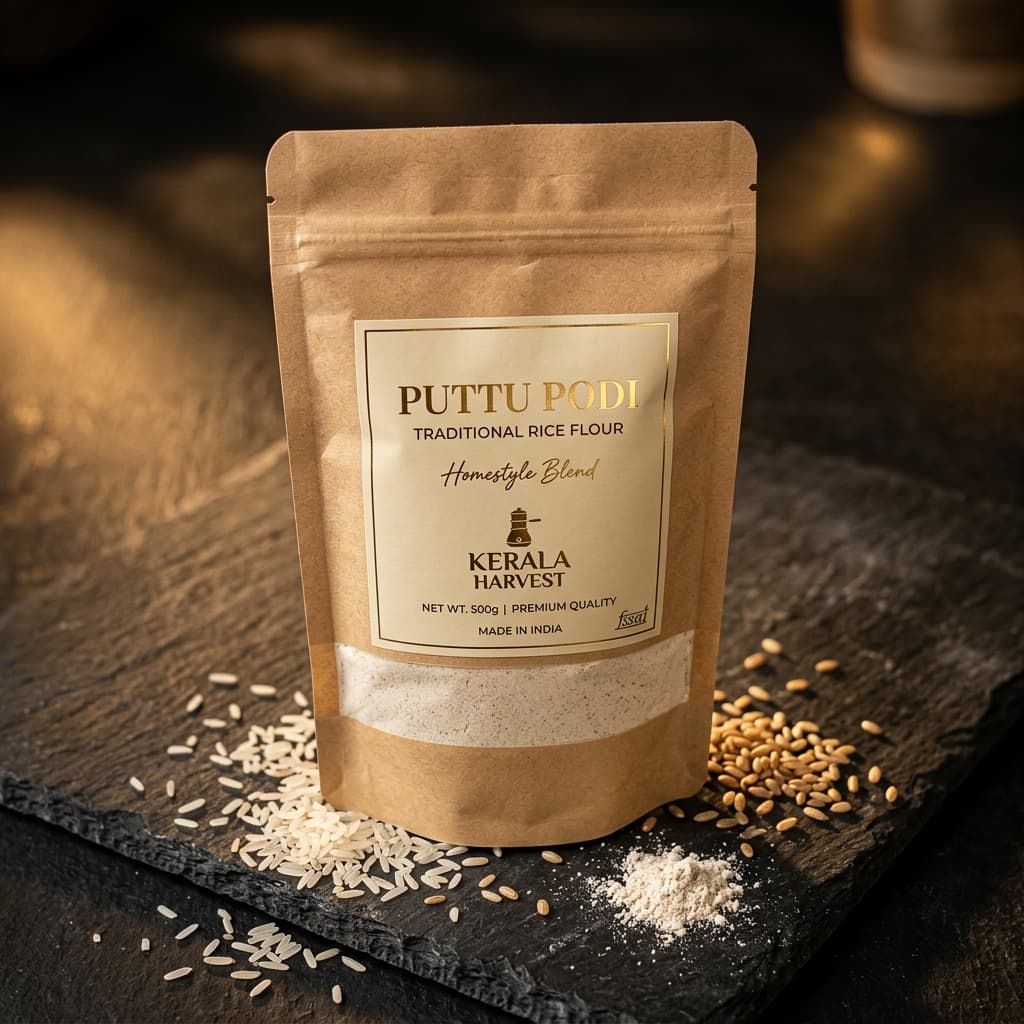
Layer with fresh coconut in a puttu kutti and steam to fluffy perfection. The coarser grind keeps each grain separate — pair with kadala curry or pazham.
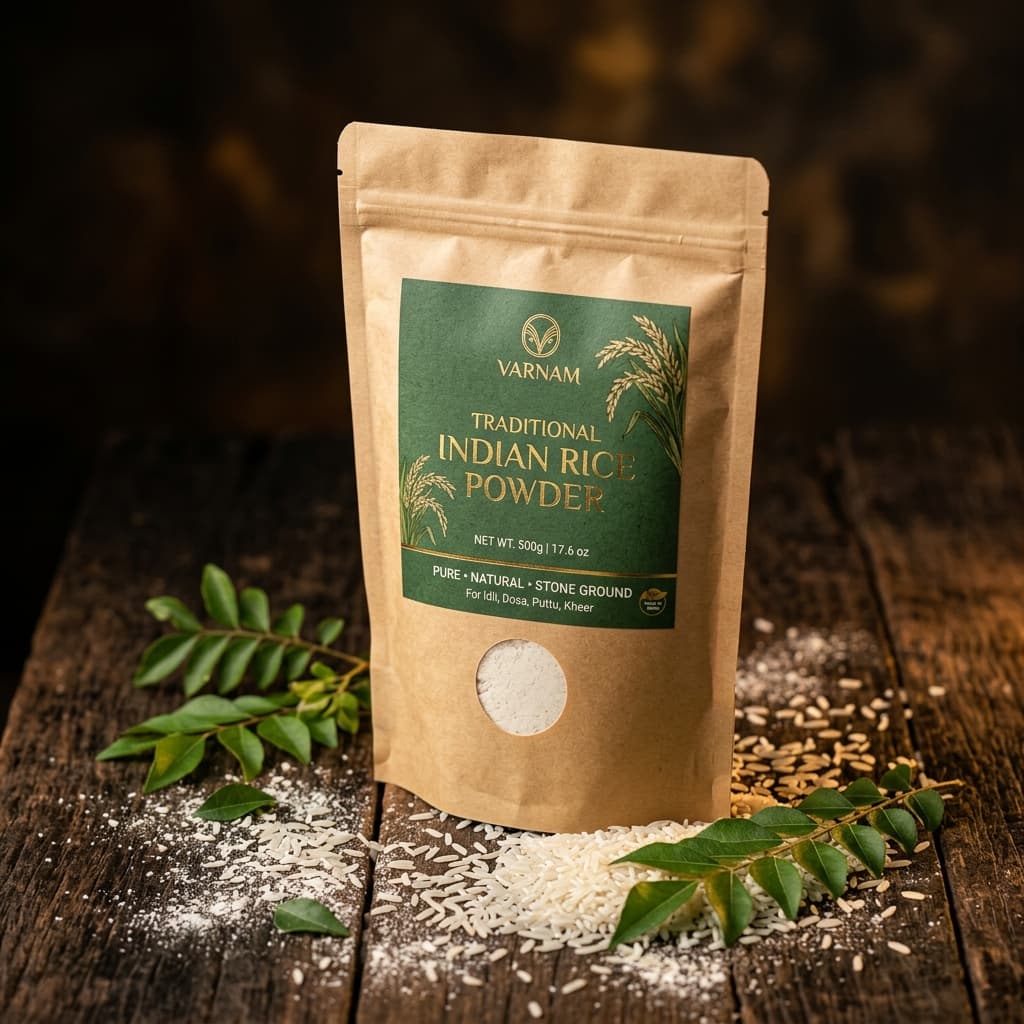
Ferment for spongy hoppers with crisp lace edges, or press into delicate string hoppers. The fine grind ensures smooth batters and silky dough.
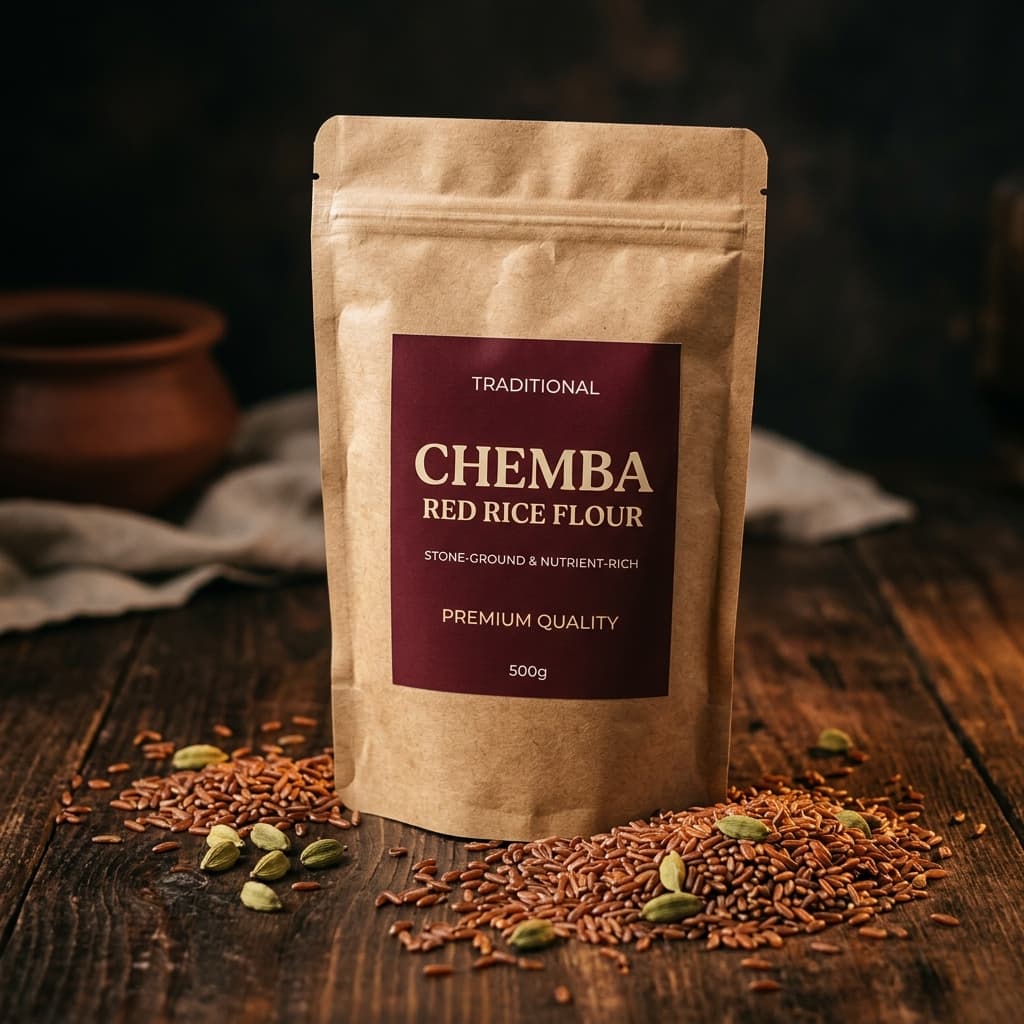
Roll into thin Malabar rice rotis on a floured board and cook on a hot tawa. Soft, pliable, and perfect alongside rich vegetable kurma or stew.
In traditional Kerala households, rice grinding was a weekly ritual. Women would soak the rice overnight, drain it at dawn, and carry it to the community ural (stone mortar) or the local mill. The rhythmic thud of the pestle or the hum of the water-powered mill was as much a part of village life as the temple bell.
Every family had preferences — coarser for their puttu, finer for their pathiri — and the local miller knew each household's specification by heart. Festival days demanded fresh-ground flour: Vishu morning puttu, Onam sadya appam, Ramadan pathiri — all required powder milled within hours, never days.
This culture of freshness and specificity is what Prakruthia seeks to preserve. In an age of mass-produced, months-old rice flour stripped of flavour, we return to the principle that powder should be milled in small batches, from known-origin grain, and delivered while its aroma still speaks of the paddy field it came from.